





Why an Integrated Township Beats a Standalone Tower for a First Home
Published on: September 12, 2026
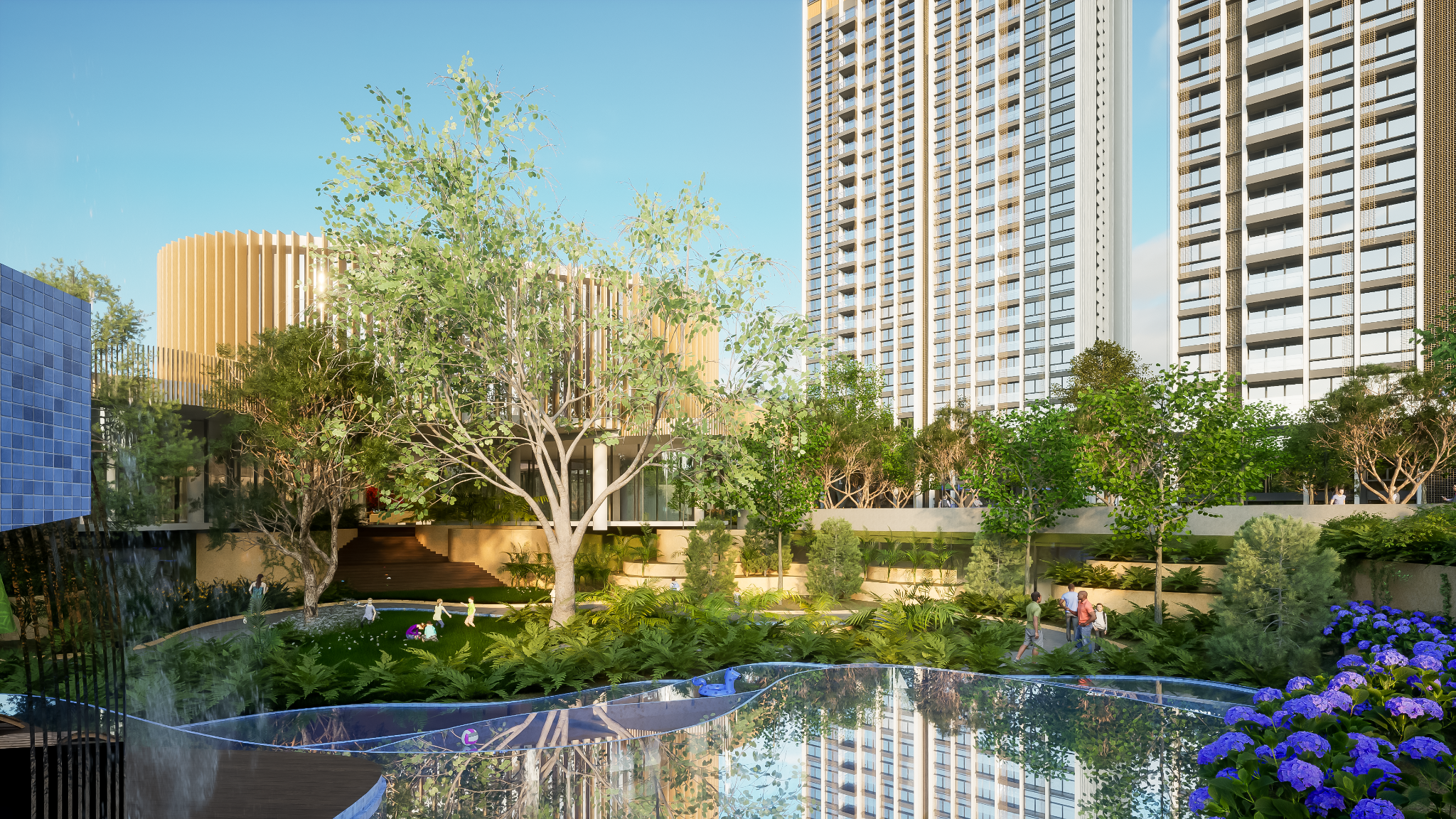
A first home is usually bought under two pressures at once: a financial situation you can’t extend and a future no one can foresee. You might be a couple now but may have 2-3 children in the coming years; you might change jobs as well. The house you select must accommodate all this without requiring you to move again, and at this point the difference between an integrated township and a standalone tower stops being a marketing point and becomes a practical issue.
In this blog post, we look at what exactly a township is, how it is different from a single building, what advantages a township has over a single tower, whether it holds its value better, what everyday life is like in one in Thane West, and what actually should be on a first-time buyer’s checklist, namely, where Runwal Realty carries out its constructions in Thane.
What counts as an integrated township?
The meaning of an integrated township is in fact simpler than the term indicates: it is a kind of development that is planned as a neighbourhood rather than as a single building. Rather than designing a tower and relying on surrounding streets to provide all other facilities, the developer plans homes, open spaces, retail facilities, healthcare services, schools, sports facilities, and community areas on one continuous site, according to a single master plan.
Three factors distinguish a true township from a large housing project. The first is scale: there is enough land that open space is planned for rather than left over. The second is variety: a mix of residential areas with retail, commercial, and social facilities, so residents do not have to go to the surrounding area for everyday needs. The third is that the development takes place in phases according to a single plan, so that whatever is constructed in the seventh year is still part of what was built in the first year.
Good integrated township planning shows up in everyday decisions, such as the layout of service roads, whether waste and deliveries have their own routes, and how far a child must walk to reach a play area without crossing traffic. Because these decisions cannot be made after the fact, the master plan is more important than the brochure.
How an Integrated Township Differs From a Standalone Tower
The standalone building is bounded by its compound wall; the gym is a room, the open area is the driveway, and the pharmacy, the park and the play area all belong to the street outside. In a well-established neighbourhood where the street already has these facilities, this arrangement works well and is generally a quicker, less costly way to enter a district.
The township changes the unit of planning from the building down to the site. Infrastructure that would not be economically viable for a single tower becomes viable when applied to hundreds of houses. With one security perimeter and one maintenance system, the lobby standard matches the garden’s. When the buildings are placed side by side, the compromises appear as follows:
| Factor | Integrated township | Standalone tower |
|---|---|---|
| Unit of planning | The whole site, under one master plan | The building alone |
| Open space | Designed in and protected by the plan | Whatever is left after parking |
| Amenities | Justified across hundreds of homes | Limited to what one building supports |
| Everyday needs | Retail, healthcare and schooling on site | Supplied by the surrounding streets |
| Security | Single perimeter, one regime | Building entrance only |
| Entry price | Higher, with higher outgoings | Usually lower on both |
| Timeline | Phased — the full experience arrives later | Complete on handover |
| Best suited to | Buyers with a longer horizon | Buyers who need to move now |
The deal you make is one of time for permanence; a gated community of township size takes longer to finish and is more expensive to maintain, since its open space is included in the master plan and can never afterwards be built on, unlike the nice open space next to a single-family house, which is only pleasant until somebody buys it.
What a Township Gives You That a Single Tower Can’t
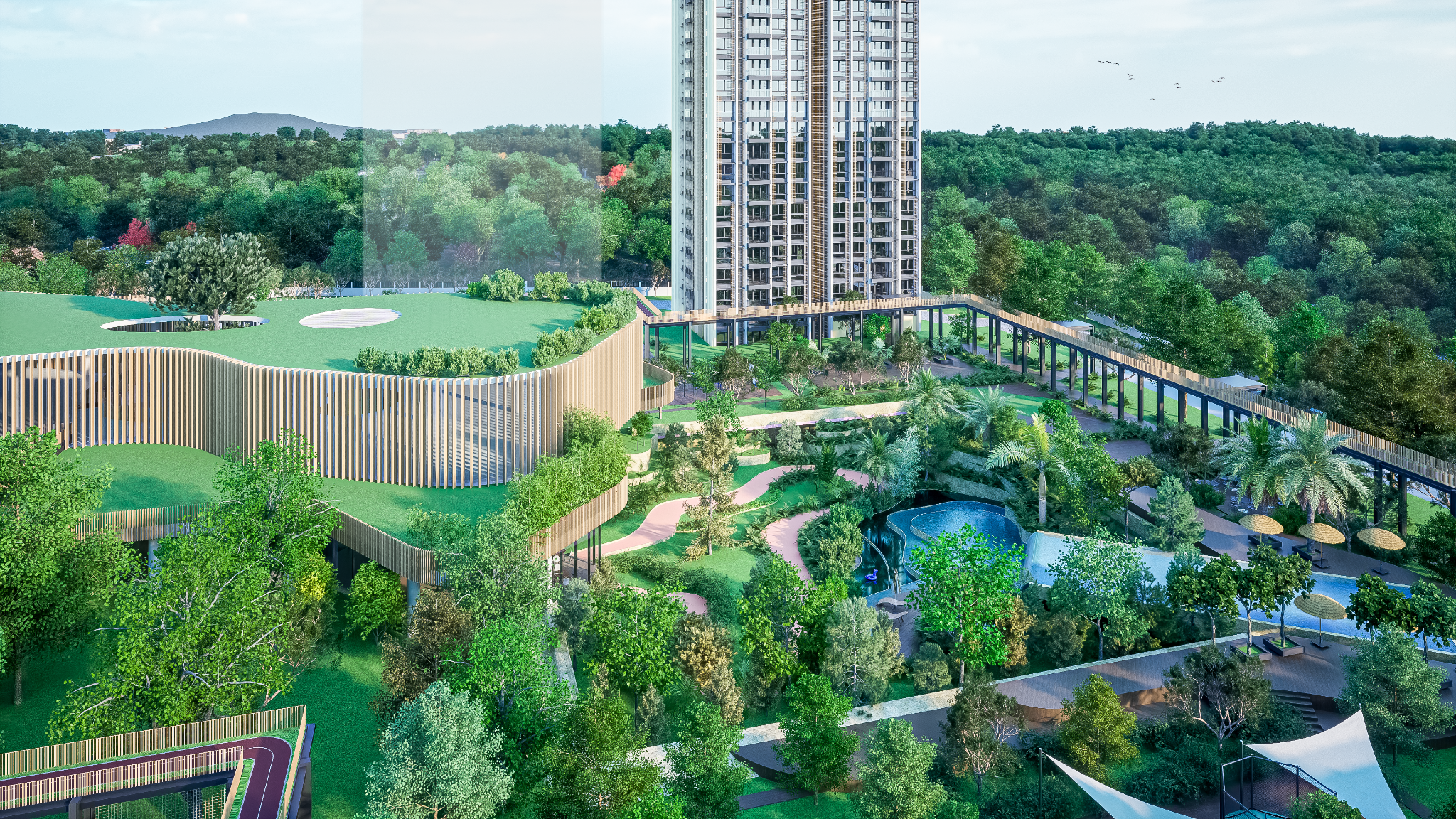
Four things matter most, and each one makes a real difference to daily life.
There should be room for sports and open spaces on a practical scale. For example, a cricket pitch, tennis and multipurpose courts, and a jogging route that runs through the landscape rather than encircling the parking bays; a single tower cannot provide these kinds of facilities. The clubhouse should suit the community. What matters is not the clubhouse’s total square footage but the square footage it provides per household; you should work out this figure yourself using the number of units, since developers seldom publish the ratio.
Within the grounds, there is all the infrastructure needed for everyday life: a crèche, a supermarket, a clinic, and a co-working lounge in a city where traffic charges for every trip; each journey avoided is therefore a real recovery of the evening. The area a child can move around every day is contained within the perimeter. This includes a play area, a sports court, and friends’ homes, all reachable without crossing a major road. For a first-time homebuyer who plans to have children in this house, that is a real material difference, not just a convenience.
Does a township retain its value better?
Yes, in general, although the reasons behind it are something that ought to be understood rather than assumed. In a township, the communal areas tend to reach a single, maintained standard, which is why a buyer visiting in the twelfth year finds a consistent environment instead of a worn-out lobby. The master plan protects the open space, so a resale buyer isn’t paying for an outlook that can be developed. Moreover, more residents keep the amenities functioning, which maintains buyer confidence over a decade.
There are two points to make. If a township sells its properties over several years, it will compete with its own resale market, so timing matters. Moreover, size alone does not ensure anything; a township that is not well maintained deteriorates faster than a single building that is well managed. In the broader market, flats in Thane West have an average price of about ₹20,350* per sq. ft, up 15.3%* over three years and 26.4%* over five years, showing steady compounding rather than speculation.
*Source: Property Rates in Thane West, Thane 2026
What Living in a Township in Thane West Is Actually Like
Thane is the best place for township living in the MMR because it still has land; in Mumbai proper, parcels measured in tens of acres have essentially stopped coming onto the market, which is why most new developments of this kind are located here rather than further south. The day-to-day character differs from that of a typical Mumbai suburb: the roads are wider, the density is lower, green areas border the Yeoor Hills and Sanjay Gandhi National Park, and school transport takes place within the township rather than on Ghodbunder Road.
The commute is the deal. When a household works in BKC or South Mumbai, it gives up daily hours in return for space, and this exchange should be deliberate, not something discovered later. However, the Thane–Borivali Twin Tunnel, the upcoming Metro Lines 4 and 5, and the Airoli–Katai Naka corridor are currently under construction and will reduce the distance.
Runwal Realty has developments in this area. Runwal One at Manpada is a 21-acre mixed-use township situated off the Eastern Express Highway and includes 4.5 acres of open landscaped space, over 50 amenities distributed across seven designated zones and a clubhouse of about 50,000 sq. ft., one of the largest in Thane, providing one, two and three BHK homes. Runwal Lands End at Kolshet follows a low-density approach with 10 acres of land, seven towers, a 1 lakh sq. ft. vehicle-free podium, and more than 70 amenities, surrounded by 1,600 acres of lush greenery. Runwal Zenith at Balkum and Runwal Eirene, both completed and ready to move into, round out the Thane range, each offering a different balance of price, configuration, and proximity.
The First-Time Buyer Checklist
When it comes to buying a first home, the factors that determine whether the purchase is a good one are seldom those that are observed during a site visit; go over them before making your decision:
Check the MahaRERA registration on the MahaCRITI portal at maharera.maharashtra.gov.in and make sure it includes the specific tower or phase you are booking. Large townships are registered phase by phase, each with its own number and completion date.
Look at the timing. When will each stage be finished, when will the shared facilities become available, and will you be living next to ongoing construction for years? Find out what the maintenance fee will be when the building is fully occupied, not at handover, and check whether the developer is currently providing financial support.
Work out how many lifts there are in each bank and how many floors each lift serves; a shortage here has a daily impact and cannot be corrected after the fact. Find out when the society will be formed and when the conveyance will be completed, as disputes over conveyance are one of the most persistent housing problems in Mumbai. Also examine the developer’s record of delivering completed projects, since with a phased purchase you are effectively lending them the means to finish the project, not just the means to sell it.