




Where Luxury Lives in Mumbai: A Guide to the City’s Premium Residential Pockets
Published on: August 20, 2026
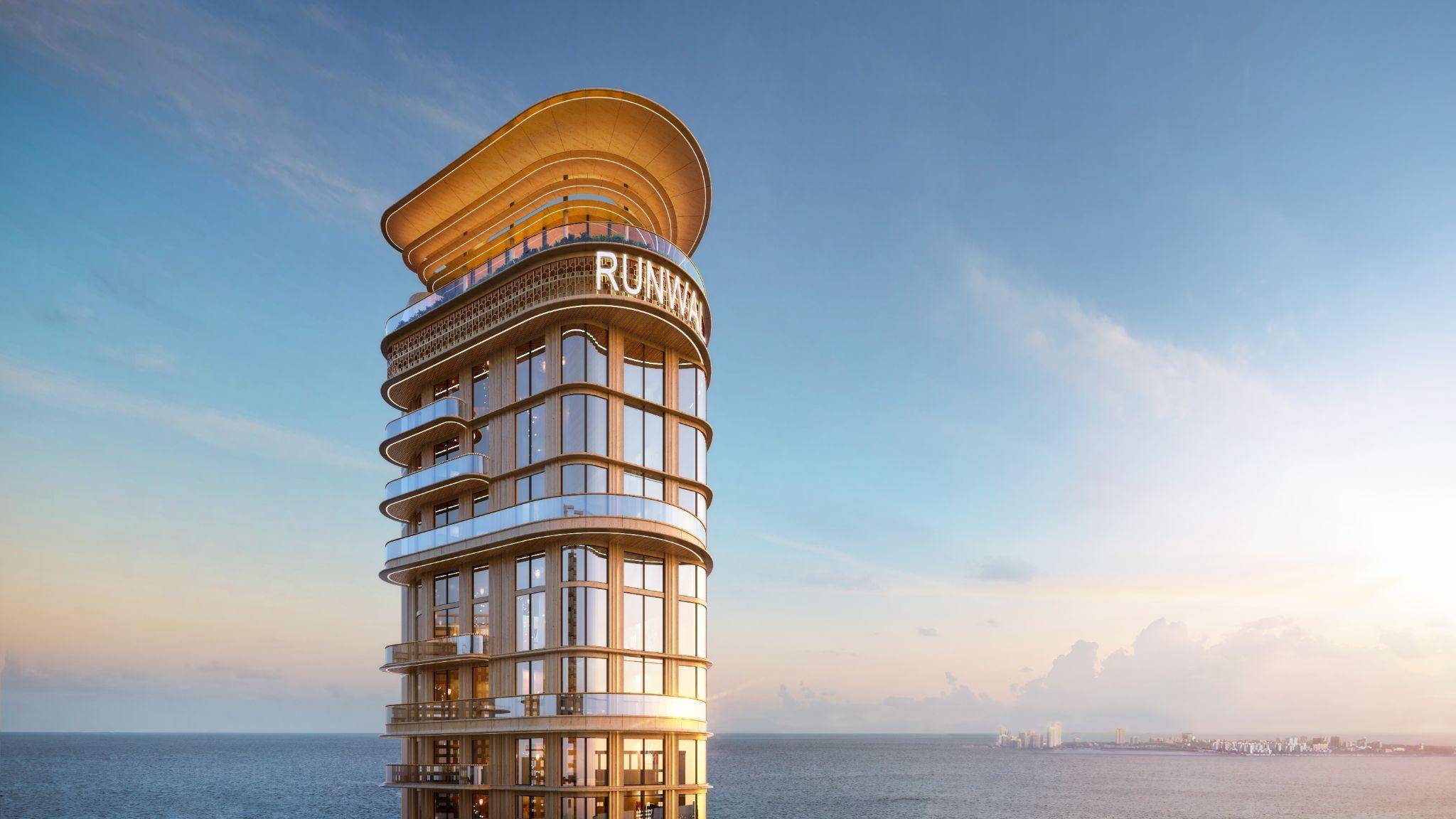
Luxury in Mumbai is not evenly spread out, and it cannot be explained merely by reference to price. The city’s elite residential areas were determined long before today’s developers by natural landscape and historical factors, for example, a ridge with sea views in one location, the redevelopment of mill land in another, and a suburb that developed around an airport and some studios. For a buyer, it is far more useful to understand why each particular area has become premium than to have a ranked list, since it shows what that area will still have to offer in fifteen years.
The guide examines Mumbai’s most upscale areas according to their own criteria: what distinguishes them, how they differ in terms of connectivity and family living, and what potential buyers of luxury apartments in Mumbai should actually be comparing. Finally, it states where Runwal Realty has developments within this framework and the reasons why the company’s projects are located in those areas.
What Actually Makes a Mumbai Address Premium
What distinguishes a truly premium pocket from an expensive one are four factors.
- Scarcity of land, where no further development is possible; the area remains in place, which is why the sea-facing parts of South Mumbai have never been displaced.
- The surroundings, meaning the presence of schools, hospitals, restaurants, and retail establishments of a standard that takes decades to build and cannot be included in a development scheme.
- The view, in a literal sense — a sea, a hill, a racecourse or an open green — since a protected view is the only feature that cannot be duplicated on the adjoining plot.
- Neighbourhood character, the most difficult to measure and often the one that makes the decisive difference.
No single pocket satisfies all four criteria equally. Still, throughout the city, premium micro-markets — for areas such as Bandra West, Worli and Powai — are trading at about ₹46,000 per square foot. The variation within that range is huge, and the figure shows you where demand has already settled rather than explaining why. If people ask which is the most upscale residential area in Mumbai, the truthful response is that the highest tier has remained stable for many generations. The more interesting question is which areas are joining it.
Mumbai’s Premium Residential Pockets, Pocket by Pocket
South Mumbai is still the leading area, with Malabar Hill, Nepean Sea Road, Altamount Road and Cuffe Parade located on the peninsula’s oldest and most restricted land, where new developments are almost non-existent, and properties change hands only infrequently. The flat rates in Malabar Hill are currently about ₹86,650 per square foot, up 12.5% from last year. Worli has a separate status within this same area. Although it faces the sea, it is connected to the business districts of Lower Parel and BKC via the Bandra-Worli Sea Link, and it also has a truly modern residential area, making it the spot where the South Mumbai address market meets the practicality of commuting to the suburbs.
Central Mumbai, comprising Parel, Prabhadevi, Dadar and Wadala, has undergone the most significant changes over the last generation. The redevelopment of the former mill lands has introduced high-rise buildings, offices, and retail spaces into areas previously used for industry. At the same time, the Eastern Freeway and metro extensions have reduced travel times to both the southern part of the city and the eastern suburbs. The main reason for this is its location: from central Mumbai, one is about equally distant from South Mumbai, BKC, and the eastern suburbs, which is why it attracts people who do not want to base their lives on a single commute.
The densest network of social facilities is found in the western suburbs, with areas such as Bandra West, Juhu, Khar and Santacruz being home to a high concentration of restaurants, schools and creative industries. The average price of flats in Bandra West is about ₹65,650 per square foot, a 20.7% rise over five years. Further north, Andheri West and Malad offer the same kind of suburban environment but at a different price level, since the metro system has changed east-west travel in this area, which is why residential areas in Mumbai that buyers used to regard as only convenient now enjoy substantial price premiums.
The eastern suburbs are the most recent additions and also the ones most misjudged. Powai, Mulund, Chembur, and Ghatkopar have something the more established premium areas cannot afford in terms of structure: open land, access to hills and lakes, wider roads, and larger plot sizes. Specifically, Mulund shares a boundary with Sanjay Gandhi National Park, providing it with protected green space. For buyers weighing the best flats in Mumbai by space rather than postcode, this area consistently offers more built-up area and more open space for each rupee.
Amenities and Community Life in Mumbai Luxury Apartments
In premium housing, the discussion about amenities has gone beyond simply listing facilities. Nowadays, what sets serious luxury apartments in Mumbai apart is not the number of facilities listed in the brochure, but whether those facilities are sized, zoned, and staffed so they can be used daily. At this level, it is standard to have a wellness floor with a good gym, a studio for yoga or pilates, a spa and a temperature-controlled pool; the differences lie in whether the space gets natural light, whether it is large enough at 7 a.m., and whether it is built to a standard that holds up through the test of time.
At the moment, three types of facilities are particularly important.
- Wellness and fitness areas, used more days each year than any other space in the building.
- Work-from-home infrastructure, such as co-working lounges, meeting rooms and a reliable power supply, has now become genuinely essential rather than merely decorative.
- The arrival experience, which includes the lobby, drop-off, and services provided by the concierge or valet, is the facility’s most frequently encountered experience.
Higher up in the hierarchy are the features of the top level: private lift lobbies, sky lounges, curated art in the common areas, and residences that have private decks or plunge pools.
The aspect of community life that buyers most tend to overlook is the design of the building in a vertical development, whether or not neighbours end up forming a real community will depend on such factors as whether there is a place to sit other than in a corridor, whether the play areas for children can be seen from where the adults gather, and whether the clubhouse can accommodate a residents’ event without closing down the building. Because residents meet each other repeatedly, low-density projects generally create closer-knit communities. Larger developments make up for this by offering a variety of programming, such as festival squares, banquet spaces, and clubs, so diverse that different households can find their own particular section of the building.
Choosing a Premium Pocket for Family Living
The best area to live in Mumbai with a family is a different question from the most prestigious address, and the difference between the two answers is greater than most buyers anticipate. When considering such a move, families should take into account the quality of schools within a short walking distance, the availability of hospitals, the amount of open space a child can reach on foot, and, above all else, how far a parent has to go twice a day. For most households, a prestigious address that requires 90 minutes of daily commuting is not a good trade-off.
On that basis, the western and eastern suburbs often do better than the well-known areas of South Mumbai. The areas of Bandra, Juhu, Santacruz, and Andheri have well-established schools, along with a dense network of everyday facilities. Powai and Mulund offer open spaces and larger apartment layouts, something which is important when children need a place to be. Central Mumbai is suitable for households in which both partners have jobs in different directions. The real benefit of a large gated community in any of these areas is that a child’s daily area, including the place where they play, the sports court and their friends’ houses, is completely within the boundaries of the estate.
Where Runwal Realty Sits on Mumbai’s Luxury Map
Runwal Realty, established in 1978 and headed by Sandeep Runwal, develops in South Mumbai, the central area, and both suburban corridors, placing luxury residential projects in Mumbai across various areas with distinct characteristics rather than concentrating them in one location. The Runwal Malabar project on Malabar Hill provides private mansions in the city’s most restricted area. Runwal Raaya is situated on 5 acres in Worli and comprises a low-density development with two towers, offering residences with three, four, and five bedrooms from 1,738 sq. ft, including private elevators and lobbies finished with Italian marble, and is about 2.4 km from the Bandra-Worli Sea Link.
Across the remaining corridors, the projects break down as follows:
| Project | Area | Configuration | Distance / Notable Feature |
|---|---|---|---|
| Runwal Timeless | Wadala | 2, 3 & 4 BHK | Metro station 1.1 km; Eastern Freeway 6.3 km |
| Runwal Rare | Andheri West | 2 & 3 BHK | DN Nagar metro station 350 m; Andheri station 2.8 km |
| Runwal Auris | Malad | 3 & 4 BHK | — |
| Runwal Sanctuary | Mulund West (LBS Marg) | 2, 2.5 & 3 BHK | Hill views along the western side |
Each of these developments addresses a different set of priorities, such as location, low density, centrality, access to the metro or a green outlook, rather than focusing on a single criterion.
When comparing the company with other developers of luxury properties in Mumbai, the fairest approach is to use independent measures. According to its Draft Red Herring Prospectus submitted to SEBI in 2025, Runwal Realty ranked among the top 10 developers in the MMR by the number of residential units supplied from January 2022 to March 2025. The key difference is that the company also owns and manages the retail and commercial properties that it builds, examples including R City Mall in Ghatkopar and R Square in Andheri; this represents a business that is substantially different from pure residential development and one that affects how the common areas and amenities are maintained rather than just provided.