




The New Luxury is a Shorter Commute: Why Living Near Work Now Defines Premium
Published on: August 24, 2026
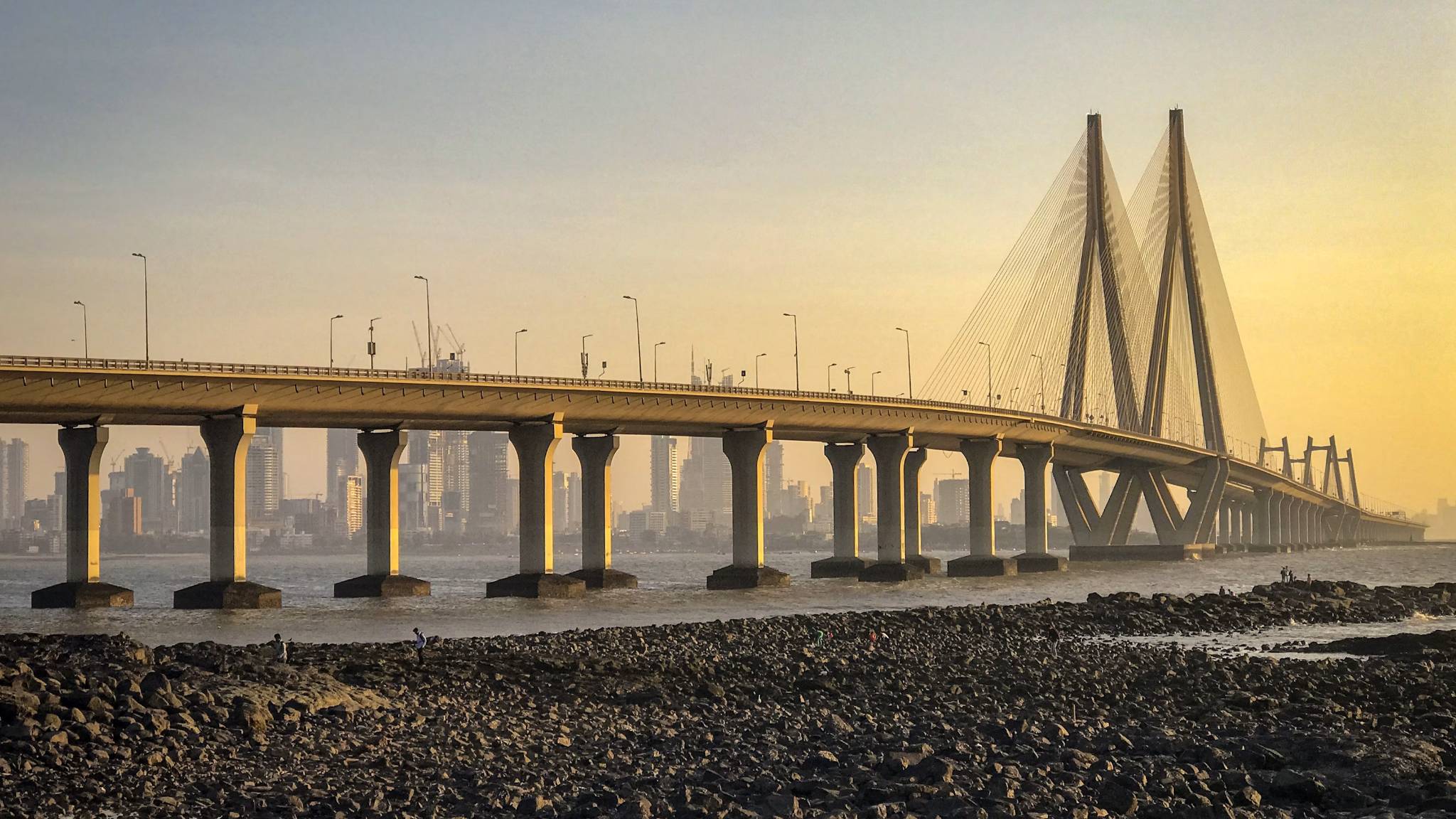
Throughout most of Mumbai’s modern history, a luxury home has been one from which you could see something such as the sea, a racecourse or a hill. Those features still carry a premium and always will; but a second factor has now joined them, and for many buyers, this new factor now determines the purchase. That factor is time: the number of hours each week the address costs you before you do anything else that day.
In this blog we look at the reasons why commute time has come to signify luxury living, identify which micro-markets actually provide the shortest route to BKC, compare Thane and Mulund for a person who works in Powai, examine the changes that the metro has already brought about, and find out which developments will shorten journeys even more including those that Runwal Realty is building in relation to that map.
Why Commute Time Became a Definition of Luxury
The figures are quite straightforward: if the journey is ninety minutes each way, it will take three hours a day and about fifteen hours a week, almost two full working days each week, as long as you keep the job. If you reduce the journey to thirty minutes each way, then you gain back ten of those hours. Nothing advertised as an amenity gives back that amount.
Three factors came together to help buyers price the property correctly. The option of hybrid working made the commute a choice rather than something people just accepted as normal; people now felt each journey when they travelled three days a week rather than six. In dual-career households, the situation became structural: two people going to work in opposite directions can’t both benefit from the same office. Finally, Mumbai’s transport system gave buyers real alternatives to compare, turning a general preference into a tangible calculation.
The result is a genuine shift in what property in Mumbai competes on. Now buyers will pay extra for a short commute, just as they do for a view; however, this advantage adds up every day rather than being appreciated only occasionally.
Which Micro-Markets Offer the Shortest Commute to BKC
BKC still has the highest concentration of corporate jobs in the city and is therefore the appropriate benchmark to use. The straightforward truth is that no address is always close; what differs is which method gets you there reliably. Here is how Runwal Realty projects are strategically placed to offer efficient connectivity to the financial hub.
| Project | Location | How It Is Strategically Placed | How the Project Benefits You |
|---|---|---|---|
| Runwal Timeless | Wadala, on the BKC-Wadala Growth Corridor | About 5 minutes from BKC, with the Eastern Freeway, Eastern Express Highway and a metro station each about 5 minutes away | The shortest BKC commute in the Runwal portfolio. The clubhouse offers 50+ lifestyle amenities, alongside a 22,000 sq. ft. Sky Promenade with a sundowner lounge, and select residences come with decks |
| Runwal Raaya | Worli, in the heart of the Golden Triangle | 2.4 km from the Bandra-Worli Sea Link, with the Coastal Road and Worli–Sewri Connector close by. | Sea Link access puts BKC within easy reach while South Mumbai’s business hubs, hospitals and schools sit close at hand. The homes are low-density with private lobbies and 6 ft. wide decks off every living room |
| Runwal Sanctuary | LBS Marg, Mulund Wes | About 25 minutes from BKC, with upcoming Metro Line 4 a few metres away and the Eastern Express Highway 10 minutes away | Buyers get space and greenery without giving up an under-30-minute BKC run. The development has 40% open space, a 3.4-acre landscaped podium, a 15,000 sq. ft. clubhouse with a rooftop pool, and views of Yogi Hills |
| Runwal Zenith | Balkum, Thane | About 1 hour from BKC via the Eastern Express Highway, with Balkum Naka the closest metro station | A luxury tower of 3 bed residences only, with panoramic creek and city views, a 10,000 sq. ft. podium on the 8th level, a two-level rooftop Sky Deck (Club Z), and 4 acres of open space |
| Runwal Lands End | Kolshet, Thane | Kapurbawdi station on Metro Line 4 (Wadala–Kasarvadavali) is 2 km away, with the Eastern Express Highway for road access | Its metro-led access suits professionals who prefer rail to road. Its amenities include a river-gazing deck, sand beach, and multipurpose courts among more |
| Runwal One | Manpada, Thane | 200 meters from the Eastern Express Highway and 300 mts from the upcoming metro line. R Mall is 500 meters from the project, and Viviana Mall and Jupiter Hospital are 5.2 km away. | Its 21-acre layout with 4.5 acres of open greens suits families who want space in the city. Its amenities include a cascading pool, children’s splash pad, and an outdoor gymnasium, among others. |
What is worth pointing out is that the commute to BKC is now as much a matter of rail transport as road transport. Metro Line 3 runs 33.5 km underground from Aarey JVLR to Cuffe Parade via 27 stations, including one in BKC, so someone in Andheri or Worli can reach the business district without using congested roads. When considering flats near BKC, the question is no longer distance in kilometres but how many minutes it takes to get from your door to the nearest station on a line that goes to your office.
Should someone working in Powai choose Thane or Mulund?
The Powai case is harder because it has never had good rail service; both options are reasonable and involve different trade-offs.
Mulund is nearer when measured by straight-line distance and is in a better position on the eastern spine since both the LBS Marg and the Eastern Express Highway pass through it; the Nahur and Mulund stations serve the Central Line, and the route to Powai by means of the Jogeshwari-Vikhroli Link Road or Kanjurmarg is short by Mumbai standards. People looking at flats in Mulund West are generally buying a commute that takes twenty to thirty minutes in normal traffic conditions in a suburb bordering Sanjay Gandhi National Park.
Thane offers considerably more living space on a township scale for the same price, along with wider roads and lower density. The downside is that the journey takes longer and is less predictable because the Eastern Express Highway handles traffic in both directions. People considering flats in Thane have to trade daily minutes for square feet and facilities.
The usual criterion is household composition. A household with a single commuter working in Powai will generally be better off in Mulund. In contrast, a family in which one member works in Powai and the other in Thane or Navi Mumbai usually ends up with Thane as the better compromise and gets more home for their money.
What the Metro has Already Changed
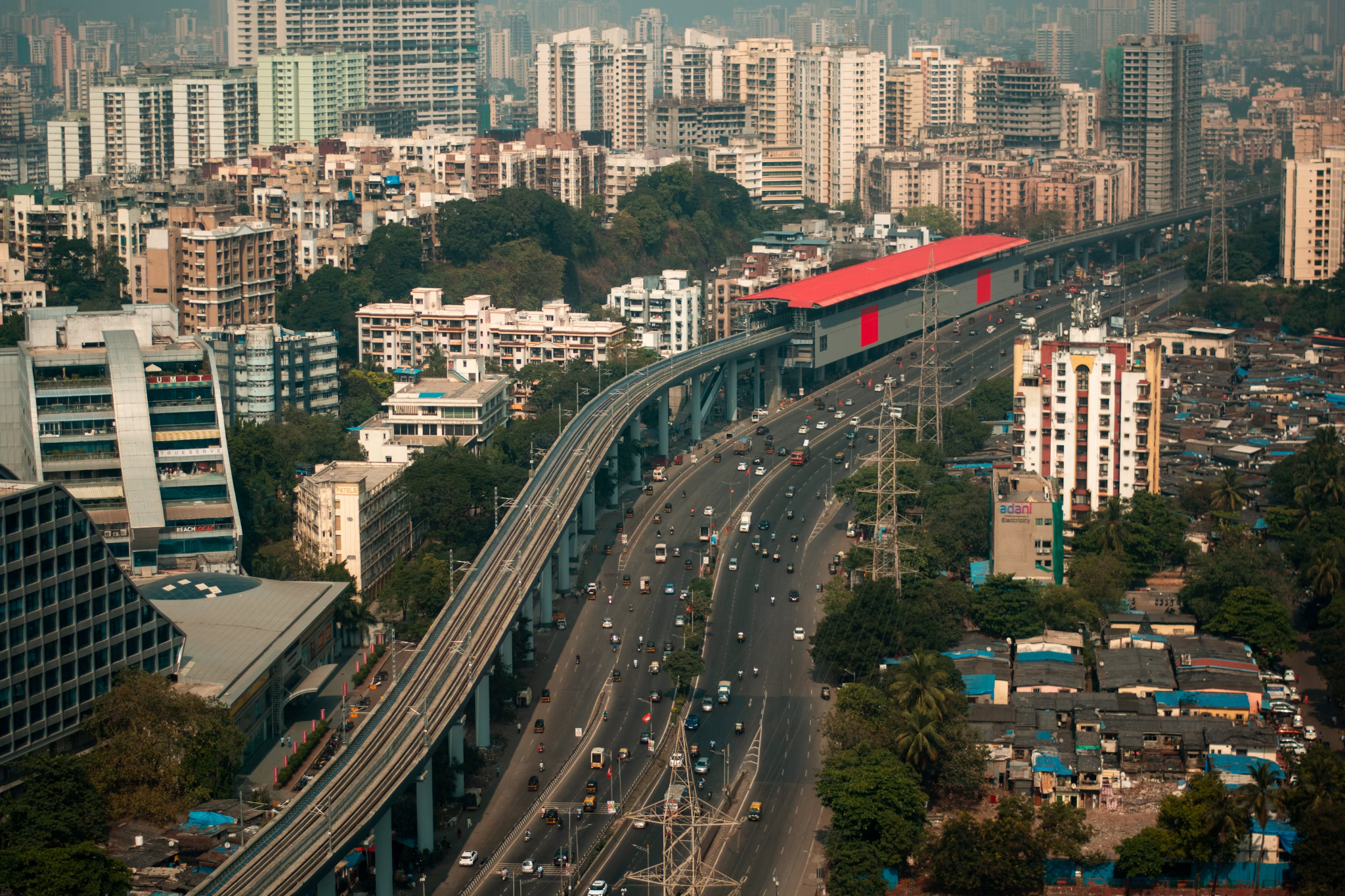
In April 2026, Mumbai’s operational metro network passed the 100-kilometre mark, making it the second Indian city after Delhi to reach this extent. Reaching that threshold matters because a network becomes useful only when it links journeys together rather than relying on a single corridor.
The effects are clearly visible. Line 3 has provided an underground, weather-proof route from BKC through Worli to Dadar. Since 2014, Line 1 has linked Versova, Andheri and Ghatkopar across the breadth of the city, and Lines 2A and 7 have improved north-south travel on Link Road and the Western Express Highway. Line 2B opened its section from Diamond Garden to Mandale in April 2026 and reached Chembur Naka in August, creating an interchange where the metro, monorail, and suburban rail are all within walking distance. Line 9 was opened to Mira-Bhayandar in April 2026.
In terms of liveability, the change is qualitative, not just about speed. Unlike a road journey, a metro journey is predictable, and that predictability lets households plan their evenings. Demand follows the same pattern across the network: being near an operational station has become a main criterion for buyers rather than a bonus, and areas once seen as peripheral in 2019 now compete on a level playing field with older suburbs that still have no station.
What Will Shrink Commutes Further
The map will change again as several projects under construction target different bottlenecks.
The sixth metro line will run along the Jogeshwari-Vikhroli Link Road closing the east-west gap that has left Powai, the most important employment area on this route, without a rapid transit system of its own, especially since this is the most important line for that employment area. The fourth and 4A metro lines will cover 32.32 km from Wadala to Kasarvadavali via Ghatkopar, Mulund, and Thane, passing through 30 stations and providing the eastern suburbs and Thane with their first metro line. In contrast, the fifth metro line extends from Thane towards Bhiwandi and Kalyan.
On the roads, the Thane–Borivali Twin Tunnel, which is situated 11.84 km beneath Sanjay Gandhi National Park and aimed at being completed around 2028, is expected to reduce a journey that currently takes between 60 and 90 minutes to about 15 to 20 minutes, thereby turning Thane from an address on the eastern edge into one that provides direct access to the western suburbs. Similarly, the Goregaon–Mulund Link Road will achieve the same effect for Mulund, with tunnels under both the national park and Aarey Colony targeted for completion in 2028 and the entire corridor expected by 2029. The Airoli–Katai Naka corridor is also expected to save 35 to 40 minutes on travel between Thane and Navi Mumbai.
The buyer’s level of discipline is straightforward: they must tell the difference between funded properties and those under construction. Indeed, all of the ones mentioned above are actually being built; this is not the case with all the projects a brochure refers to.
Where Runwal Realty Builds Against This Map
Runwal Realty’s portfolio aligns unusually with the city’s employment geography, which makes it a useful illustration of how the calculation works in practice.
Runwal Timeless in Wadala East is about 1.1 km from the metro and 6.3 km from the Eastern Freeway, offering two- to four-bedroom deck residences priced at ₹2.18 crore*. Those considering flats in Worli should look at Runwal Raaya, a low-density development with two towers on a four-acre site, located about 2.4 km from the Bandra-Worli Sea Link.
In the western area, Runwal Rare in Andheri West is about 350 metres from the DN Nagar metro station. Meanwhile, Runwal Auris in Malad West is a 58-storey building with six residences per floor and is roughly 1.4 km from the Malad West metro station. People comparing flats in Andheri based on proximity to the metro station will find few properties closer than Rare.
In the eastern area and in the Thane belt, Runwal Sanctuary is located on LBS Marg in Mulund West, covering six acres with five towers and having about 40% open space, and it lies directly on the route that will be served by Metro Line 4. The Runwal One development at Manpada is a 21-acre residential area off the Eastern Express Highway, situated at the Thane end of the twin-tunnel corridor. Both developments address the same question from different positions on the map: how close can you live to where you actually work?