




How to Judge a Thane Project for Long-Term Appreciation
Published on: August 13, 2026
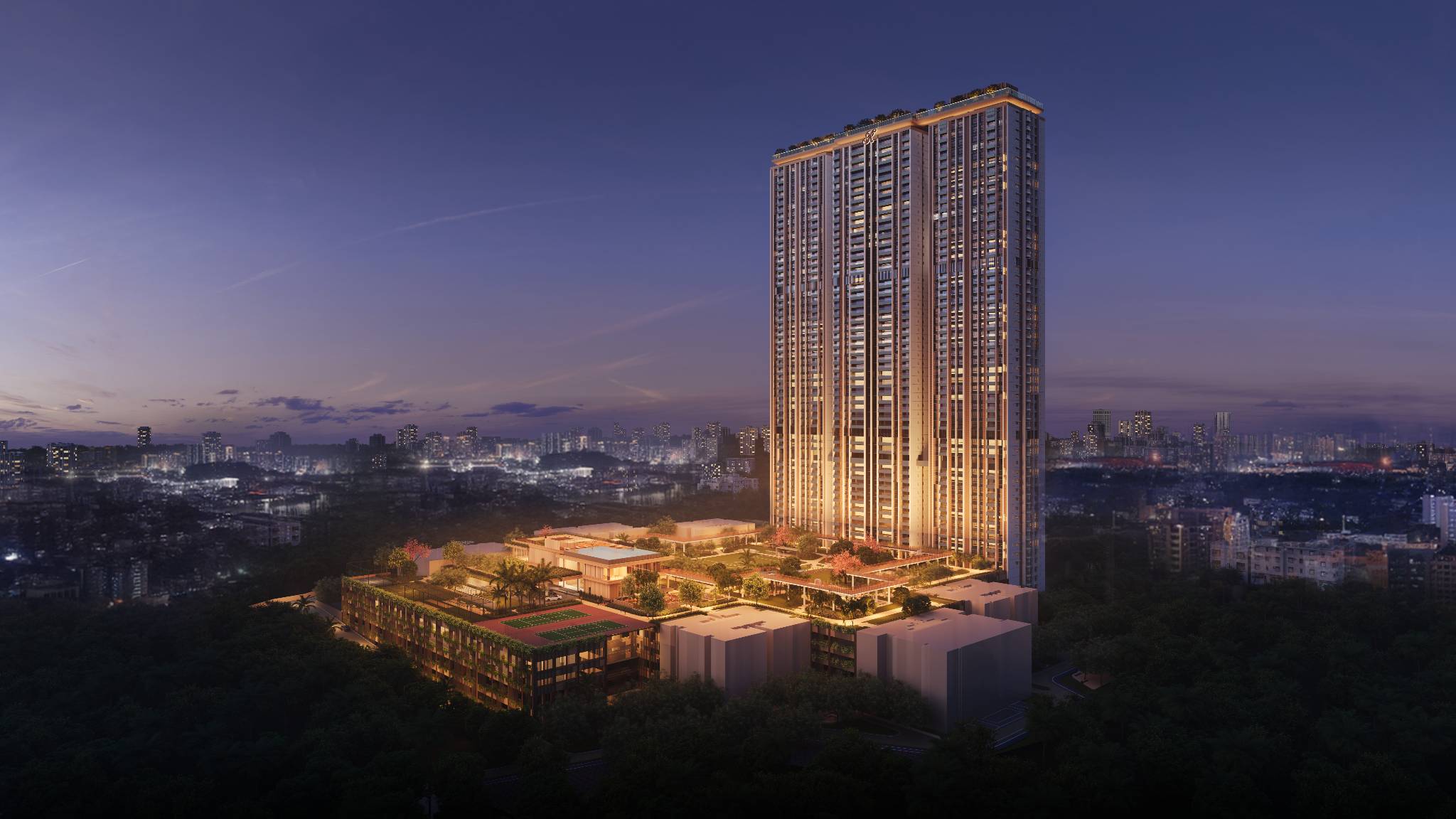
If you ask whether Thane is a good place to invest, nearly everyone will give a confident answer: yes. Thane comprises more than a single market; over the past five years, some of its areas have seen their values nearly double while others have actually declined in absolute terms, and yet both groups of buyers were told they were investing in the same growth story.
The guide deals with the distinction between the two possible outcomes. It explains how to calculate an appreciation rate correctly, identifies the real factors that contribute to long-term value in Thane’s real estate, shows why good road and rail connections are more important in this area than almost anywhere else in the MMR, and outlines how to evaluate a particular project after you’ve chosen a location, specifically mentioning where Runwal Realty carries out its developments across the city.
Are There Any Advantages to Buying Into Thane? What the Figures Actually Indicate
Begin with the city-level picture. According to Anarock, average home prices in Thane rose about 46% in three years, from ₹13,550 per sq ft in Q2 2022 to ₹19,800 by the end of Q2 2025. Over five years, rates climbed from around ₹12,400 to ₹19,800, roughly 60% in total. That is a strong, clearly positive run, but it still falls short of the doubling that is frequently assumed in market discussions.
Anarock’s report (https://websitemedia.anarock.com/media/THANE_The_Rising_Star_of_MMR_Real_Estate_02b56209fa.pdf) identifies five micro-markets that account for the highest volume of new launches: Panchpakhadi–Naupada, Pokhran Road, Majiwada–Balkum, Kolshet Road and Kasarvadavali. Supply is concentrated in specific pockets, and those pockets perform very differently from one another. New supply, connectivity and employment access are distributed unevenly across these areas, so two neighbourhoods in the same city can deliver very different returns over the same decade. The headline figure tells you how Thane has done as a whole. It does not tell you how any particular address will do. Same city, same decade, same general infrastructure story, yet one neighbourhood returned several times what another did, and a third barely moved.
The straightforward reply to the question of whether it is worthwhile buying property in Thane is that yes, it is, on certain conditions. The city does have real structural advantages, namely its own employment opportunities, large tracts of land that Mumbai itself cannot provide, and a more committed transport infrastructure converging there than in any other part of the MMR. Nevertheless, returns depend heavily on location, so a general view of the city as a whole is almost useless. Appreciation of property in Thane is determined at the micro-market level and, in some cases, even at the individual project level within a micro-market.
How to Calculate a Property’s Appreciation Rate
A property’s appreciation is generally expressed as the percentage increase in its value over a particular period. However, a cumulative growth figure does not tell you how much the property’s value has increased annually. To make a meaningful comparison with other investments, you need to calculate its Compound Annual Growth Rate (CAGR). This involves dividing the current property value by its original value, raising the result to the power of one divided by the number of years, and subtracting one.
Consider Thane’s residential property market. According to ANAROCK’s report, average residential prices in Thane increased from ₹13,550 per sq. ft. in Q2 2022 to ₹19,800 per sq. ft. in Q2 2025, representing approximately 46% cumulative appreciation over three years. (https://www.business-standard.com/finance/personal-finance/thane-housing-prices-soar-46-in-3-years-should-you-still-buy-here-125071700469_1.html) When expressed as CAGR, this translates to approximately 13.5% annually. The distinction is important because it allows buyers to assess the pace of appreciation rather than relying solely on the total increase in property values. These figures represent market-wide averages, however, and should not be treated as returns achieved by every individual property.
The next consideration is the actual cost of owning the property. The purchase price is only one part of the investment. Buyers must also account for stamp duty, registration charges, applicable GST, and brokerage. For under-construction residential properties, the standard effective GST rate is 5%, while qualifying affordable housing attracts 1%, subject to applicable conditions. (https://www.pib.gov.in/Pressreleaseshare.aspx?PRID=1569106®=48&lang=2) Maintenance charges, property taxes, and home loan interest add to the cost of ownership, while selling expenses and applicable capital gains tax affect the final proceeds.
These expenses can significantly influence the returns an investor ultimately receives. Therefore, when evaluating property investment in Thane, it is important to consider both the annual rate of appreciation and the overall cost of ownership to understand the investment’s long-term financial potential.
What Makes a Thane Location Appreciate Over the Long Term
The Kalhers and the Owales are separated by four factors, one of which is not the project’s list of amenities. The first of these is the scarcity of land in the local market. In an area with a large amount of undeveloped land, every price rise will be offset by an increase in supply, and thus appreciation will be capped; in an area that is, in effect, fully developed, new housing stock cannot be absorbed, and so demand is reflected in rising prices. That is why, when inquiring about residential projects in Thane, you should always ask what else could be built within a kilometre.
The second point is about actually committed and funded infrastructure, not just announced infrastructure; Maharashtra has a well-documented history of projects that took 10 years longer than promised, and those who had paid a forward premium for a corridor that finally arrived 8 years late received nothing as a result of the delay. The criterion should be whether contracts have been awarded and whether construction is underway, not whether an alignment has been approved.
The third point is that job opportunities are available. Thane has the advantage over more remote areas in that it maintains its own commercial infrastructure, including the Wagle Estate, offices along the Ghodbunder corridor, and employment areas in Navi Mumbai and Powai within commuting distance. Places that are genuinely part of a job-attracting area retain their value when the market is weak; it is the dormitory areas that rely completely on commuters from Mumbai that tend to lose value first.
The fourth factor is established social infrastructure, including schools, hospitals, shopping centres and recreational facilities. According to ANAROCK’s Thane City Real Estate Report 2025, Thane has over 24 reputed schools and colleges, more than 12 multi-specialty hospitals, and over five malls and parks. Manpada, situated along Ghodbunder Road, benefits from access to these amenities. Such established infrastructure not just supports everyday convenience, but also strengthens residential demand and can contribute to long-term property appreciation. ,
Road Connectivity and Its Impact on Thane Property Values
In Thane West, connectivity is by far the most important factor affecting property values, since the limitation in Thane has always been the time it takes to get out of the area rather than the amount of land or the amenities available. All those developments which have considerably reduced the time cost have caused the value of the surrounding land to rise. At the present moment, there are more projects of this kind under construction in Thane than has been the case at any time in its history.
The Thane–Borivali Twin Tunnel is the longest one; it is an 11.84 km twin-tube passage underneath Sanjay Gandhi National Park, beginning at Tikuji-Ni-Wadi in Manpada, and it is anticipated to cut a journey that currently takes between 60 and 90 minutes down to about 15 to 20 minutes, with completion now expected to take place around 2028. This change does more than improve the commute; it moves Thane from the eastern fringe of the MMR to a position that gives it direct access to the western suburbs, a change in kind rather than just a change in degree.
The upcoming Metro Line 4 and its 4A extension create an elevated route of 32.32 km from Wadala to Kasarvadavali, including 30 stations, while partial services on the Gaimukh–Cadbury Junction section were most recently planned for late 2026. Line 5 will link Thane with Bhiwandi and Kalyan, and the approved Thane Integral Ring Metro, which is 29 km long and has 22 stations, looping through Wagle Estate, Manpada, Waghbil and Balkum, is due around 2029. Moving eastwards, the Airoli–Katai Naka corridor should reduce travel time between Thane and Navi Mumbai by 35 to 40 minutes by means of a twin tunnel through the Parsik Hills.
When considering a purchase, the practical advice is to compare the shortlisted projects with these alignments by asking two questions: how far on foot is the nearest already confirmed station or portal, and what is the current construction status for that section? Being near a construction corridor is the most reliable indicator of medium-term price appreciation in real estate projects in Thane. In contrast, proximity to one that has only been approved is equivalent to betting on the state’s ability to deliver.
Judging the Project Once You Have Chosen the Location
The location has the greatest influence on returns, but it’s the project that determines whether you actually achieve them. When checking the MahaRERA registration and the declared possession date, refer to the portal rather than the brochure. Consider the developer’s track record of completing projects in the same city. Find out about the land title and whether the plot is owned or subject to a development agreement. Examine the total number of units and the phasing, since a large project releasing its inventory over several years will compete with its own resale market. And it is better to go for specifications and common areas built with maintenance in mind, rather than those built to look good in photographs. A lobby that appears outdated after 6 years will lower the resale value of the entire tower.
Among the best residential areas in Thane, the developed sections along the Eastern Express Highway and the well-established parts of Ghodbunder Road offer the best mix of affordability, employment opportunities, and infrastructure. In contrast, Kolshet and Balkum are closer to the new road corridors. Runwal Realty has developments in several of these locations: Runwal One in Manpada, Runwal Lands End in Kolshet, Runwal Zenith in Balkum and Runwal Garden City in Balkum are upcoming, while Runwal Eirene, also in Balkum, is already completed and ready to move into. Each of these projects is located in a different Thane micro-market and has a different combination of price, layout, and distance from the corridors mentioned above, which is exactly the sort of comparison a buyer should consider when deciding between them.
Read about all of Runwal Realty’s Projects in Thane.