





Pimpri-Chinchwad: How Pune’s Industrial Belt Became a Township Destination
Published on: September 18, 2026
For four decades, Pune worked in Pimpri-Chinchwad without actually living there. Surrounding the auto and engineering factories along the old Mumbai-Pune highway was a dense working city, but the housing provided then was practical rather than ambitious. This has now changed, but not gradually. People currently looking at flats in Pimpri-Chinchwad increasingly prefer to buy there rather than in areas that were seen as a clear improvement ten years ago.
In the blog, we look at what is really causing that change, compare PCMC with Baner and Hinjewadi in terms of price and growth, determine which area is actually suitable, list1 the checks to carry out before purchasing, and assess whether it is a sound long-term investment, including Runwal Realty’s presence in the area.
Why PCMC is Emerging as a Residential Destination
The reason lies in the availability of land. Since PCMC covers an area of 181 square kilometres and much of its industrial estate has been gradually released or redeveloped, plots measured in tens of acres can still come onto the market. Pune’s existing residential areas cannot provide this kind of land, which is why this type of township consisting of houses, retail spaces, open land, and social facilities all planned together on a single site has ended up concentrated in PCMC almost by default.
Another reason is that the industrial base has never disappeared; it has diversified instead. The auto and engineering clusters near Bhosari still provide jobs for the local population, the Talawade IT Park is within the corporate boundaries, and the Hinjewadi tech area is next to, rather than far from, the city. Since households in this area generally do not rely on a single employment area, housing demand remains steady rather than cyclical.
The third reason is civic infrastructure, which came before the housing rather than after; this included wide arterial roads, the Science Park, organised retail, and a municipal corporation with a better record of delivery than most other corporations in the area. Buyers looking at residential projects in Pune find that PCMC has already put everyday infrastructure in place rather than merely promising it.
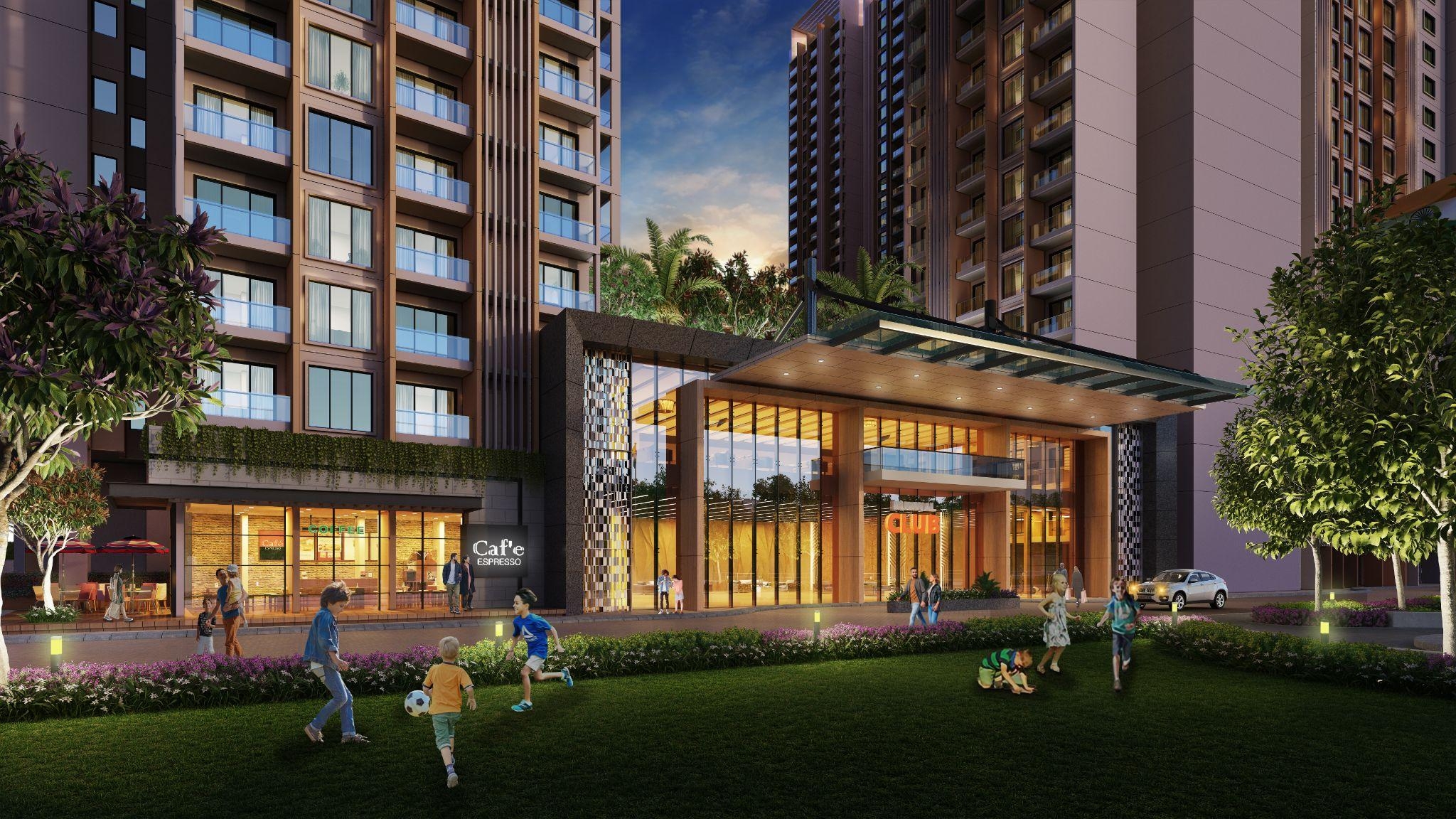
Runwal Realty’s involvement in the area is through Runwal The Central Park, a 26-acre integrated township in Chinchwad on the old Mumbai-Pune highway; this project is the company’s biggest development outside the MMR. The township offers 2, 3 and 4 BHK residences across 14 towers, along with more than 50 amenities, a large-format retail mall within the complex, and PCMC’s largest clubhouse. The upcoming metro station is about 600 metres away, and the old Mumbai-Pune highway is right at the entrance, making it one of the market’s most direct examples of the PCMC case: township scale, metro access, and integrated retail all on the same site.
What exactly is behind the rise in demand? The Hinjewadi area, the Metro, or the Ring Road?
All three matter, but they aren’t equally important, and they aren’t on the same timeline.
The metro is the main factor. The Pune Metro’s Purple Line has already passed through PCMC, extending from PCMC Bhavan southward toward Swargate. This means Pimpri-Chinchwad is ahead of several other areas considered more upscale that have not yet received their first station, an unusual situation for a region still regarded as entry-level. The Hinjewadi–Shivajinagar corridor is a distinct metro line under construction that will directly serve the IT region.
Hinjewadi acts as a source of demand rather than a preferred location. The tech park creates jobs; PCMC takes in many people because housing there is cheaper, bigger, and better serviced. This relationship helps explain why property prices in Pimpri Chinchwad are so resilient; instead of competing with Hinjewadi, the area is, in effect, housing people from there.
Of the three, the Pune Ring Road has been planned the longest. It is still being constructed and, when completed, will redirect regional traffic away from the city centre and improve access to PCMC’s northern and western areas. Although it is a real prospect for the future, a buyer should view it as having potential rather than as something already reflected in the current price.
How Pimpri-Chinchwad Compares With Baner and Hinjewadi
It is better to compare the two based on figures rather than on their reputation. According to the current listing data:
| Pimpri-Chinchwad | Hinjewadi | Baner | |
|---|---|---|---|
| Average flat rate | ₹6,950 per sq. ft | ₹8,200 per sq. ft | ₹11,700 per sq. ft |
| Growth, 1 year | 7.8% | 1.9% | 8.3% |
| Growth, 3 years | 15.8% | 24.2% | 32.2% |
| Growth, 5 years | 25.2% | 62.4% | 55.0% |
| Rental yield | Mid-range | About 3% | About 2.8–3.5% |
| Character | Industrial base, township scale | IT-led, employment-driven | Established premium suburb |
| Metro | Purple Line already operational | Served by the Hinjewadi corridor | Still awaiting connection |
When you look at the figures together, the pattern becomes obvious. Pimpri-Chinchwad has an average price of about ₹6,950* per sq. ft, having increased by 7.8%* in the last year and by 25.2%* over five years, compared with Baner at around ₹11,700* per sq. ft with a rise of 55.0%* over five years and Hinjewadi at about ₹8,200* with a growth of 62.4%. Although Baner and Hinjewadi have appreciated more rapidly, this is because they started from higher and more speculative levels; PCMC has grown more steadily and is still 30 to 40% cheaper than the premium areas. Moreover, Baner’s rental yield of about 2.8–3.5%* is also lower than Hinjewadi’s 3%*, which matters for those buying to let.
The arrangement is simple: Baner offers a well-established premium address, along with the retail and dining facilities that come with it. Hinjewadi gives you access to the IT parks. PCMC offers you more space, town-level facilities and an operational metro, at a considerably lower entry price in return for having to drive a longer distance to Pune’s social heart.
Who Should Buy in Pimpri-Chinchwad
IT and engineering professionals in the north-west corridor: if your office is in Hinjewadi, Talawade, or Bhosari, PCMC offers a shorter commute than most premium addresses in Pune, at only a fraction of the cost per square foot.
For first-time buyers who want a township-sized home, the money that would buy a small two-bedroom flat in Baner can buy a bigger home in a planned development here, complete with open land and facilities a standalone building cannot provide.
Families are already there; established schools, hospitals, and organised retail are in place, so families do not have to wait for social infrastructure to be developed. The township layout ensures a child’s daily travel distance stays within the boundaries.
Investors with a long-term perspective have seen PCMC’s value rise steadily rather than sharply, and rental demand there is based on actual employment levels. Those looking to buy luxury properties in Pune at a true discount compared to the more expensive areas will find the largest such gap here.
It is less suitable if your work or social life is based in Koregaon Park, Kalyani Nagar, or the eastern corridor, since the daily commute cancels out most of the price benefit.
What to Check Before You Buy
Because of its rapid growth, project quality varies widely. Consider carrying out these checks before committing:
Check the MahaRERA registration on the MahaCRITI portal at maharera.maharashtra.gov.in and make sure it includes the specific tower or phase you are booking. Large townships are registered phase by phase, each with its own number and completion date.
Verify the approving authority and the plan sanction. Because different development control regulations govern PCMC and PMC, determine which applies to your property and confirm that the sanctioned plan matches the one being constructed.
Inquire specifically as to the water supply and drainage arrangements, since these are the areas where civic concerns are most pressing in rapidly expanding Pune, and the answers differ from one area to another rather than depending on the developer.
Look at the phasing and the maintenance charge when the property is at full occupancy, not at the subsidised figure at the time of handover and find out when the society will be formed and when conveyance will be completed.
Review the developer’s track record of completed projects. In a phased township purchase, you are effectively guaranteeing their ability to finish it, not merely their ability to sell it.
Is PCMC a good investment for the long term?
Based on the evidence, yes, provided that it is a compounder and not a speculative investment. The argument rests on three factors unlikely to change: a varied employment base covering both manufacturing and IT, strong existing links to the metropolitan area that most other localities in Pune lack, and sufficient land to continue supplying townships. Steady growth of 25.2% over five years from a low starting point, along with a 30% to 40% discount compared to premium areas, represents a sound structural position.
It is worth mentioning the risks. Because supply is ample, prices can rise only so fast. Quality varies more in this area than in the more established suburbs, so the choice of project matters more than the choice of location. Moreover, the Ring Road’s advantage will be felt over the years, not immediately.
For a long-term buyer, then, the decision comes down to the project, and this is where Runwal The Central Park fits the investment case. It sits on the connectivity PCMC already offers: the old Mumbai-Pune highway is at its entrance and the metro station is about 600 metres away. Its 26-acre integrated layout, with residences, a retail mall, amenities and PCMC’s largest clubhouse on one site, is exactly the kind of township that the area’s land advantage makes possible. Backed by a developer for whom it is the largest project outside the MMR, it gives buyers a way into PCMC’s steady, employment-led growth through one of the area’s most complete townships.